


In this article
The Homelab Mindset: Tinkering vs. Running
There is a dangerous illusion that plagues many self-hosted infrastructure enthusiasts: the belief that if it works in your living room, it works in production. I have watched talented engineers build elaborate homelabs, complete with custom networking and automated deployments, only to crumble when asked to support a client’s live environment. The gap between “it works on my machine” and “it works for everyone” is not just technical; it is philosophical.
A homelab is a safe, low-stakes environment for personal projects and learning. It is a playground where you can break things without losing your job. In contrast, production support is about keeping the lights on for users who are paying for reliability. The mindset required for tinkering—curiosity, experimentation, and tolerance for chaos—is fundamentally different from the mindset required for production support—discipline, predictability, and accountability.
The value of tinkering cannot be overstated. Homelabs help identify technical interests and build practical skills that translate to careers. Many professionals credit their homelab experience for their first job as a Systems Administrator, emphasizing the career value of self-directed learning. However, we must draw a hard line. The homelab is a training ground, not a production substitute. Using it as a proxy for client-ready infrastructure is a recipe for failure.
Building the Bridge: Infrastructure Differences
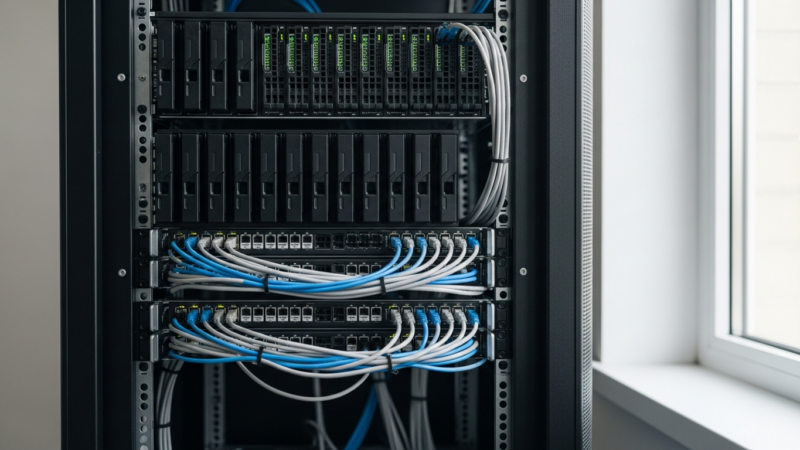
The physical and virtual infrastructure of a homelab often mimics production, but the underlying assumptions are completely different. In a homelab, you might use virtualization platforms like XCP-ng or Proxmox, and storage solutions like TrueNAS or Synology. These are excellent tools for learning, but they are often deployed in single-node or loosely coupled configurations. Production requires higher availability and redundancy that a typical homelab lacks.
Networking is another area where the divergence is stark. Homelabs might use pfSense or UniFi for convenience, but production demands strict VLAN segmentation and broadcast domain isolation. In a homelab, a misconfigured VLAN might just mean you can’t access your media server. In production, it can mean a security breach or a complete network outage.
One effective practice to maintain stability is the use of a “breaker” host. A common strategy is to maintain a separate, isolated host on its own VLAN specifically for risky experiments. This prevents stability issues in the main lab from cascading into your core services. This separation is critical. It allows you to test new configurations, break things, and learn from the failure without impacting the stable environment. Without this isolation, the homelab becomes a fragile ecosystem where one bad update can take down your entire digital life.
The Support Gap: Monitoring and Maintenance
The most significant gap between a homelab and a client-ready environment is not the hardware; it is the support layer. In a homelab, you are the user and the support engineer. If something breaks, you fix it immediately. In production, you need systems to detect issues before users do.
Production support relies on tools like Splunk, Grafana, and Datadog to monitor live systems. These tools provide the visibility needed to investigate crashes and understand system behavior over time. Without them, you are flying blind. In a homelab, you might rely on simple ping checks or manual logs. In production, you need comprehensive monitoring that covers everything from CPU usage to application-level errors.
Ticketing and workflow are also critical differentiators. Production support uses Jira or ServiceNow to track issues, ensuring that every problem is documented, assigned, and resolved. This is unlike the ad-hoc nature of homelab tinkering, where issues are often solved in the moment and forgotten. The discipline of ticketing ensures that knowledge is retained and that recurring issues are addressed systematically.
Automation plays a role in both, but the goals differ. Homelabs use tools like Home Assistant or Docker for convenience, allowing you to spin up services quickly. Production support uses automation to reduce manual toil and ensure consistency. The goal in production is not just to automate tasks, but to automate them reliably and repeatably. This requires rigorous testing and validation that is often skipped in the homelab.
When is a Homelab ‘Client-Ready’?
A homelab becomes client-ready when it meets the standards of security, documentation, and reliability required by external stakeholders. This is a high bar.
Security is the first major hurdle. Homelabs often lack rigorous security scanning. Production requires tools like GVM (OpenVAS) and proper certificate management. In a homelab, you might use self-signed certificates or weak passwords. In production, these are unacceptable. You need to implement strict access controls, regular vulnerability scans, and incident response plans.
Documentation is another key factor. Production support requires clear documentation and SLAs (Service Level Agreements), which are rarely needed in a personal lab. If a service goes down, you need to know exactly how to restore it, and you need to communicate that status to your clients. Without documentation, you are reliant on tribal knowledge, which is fragile and unscalable.
Reliability is the final test. Moving from “it works on my machine” to “it works for everyone” requires rigorous testing and rollback plans. In a homelab, you can afford to have downtime. In production, downtime is a business risk. You need to implement redundancy, backups, and disaster recovery procedures that are tested regularly.
Conclusion: Leveraging the Lab for Professional Growth
The homelab is a powerful tool for learning, but it is not a substitute for production experience. Use the lab to learn the tools of production support, such as monitoring, ticketing, and security. But always remember the distinction: the homelab is for learning, and production is for delivering value.
The goal is to bring the curiosity of the homelab into the discipline of production support. This means using your homelab to experiment with new technologies, but applying the rigorous standards of production to your learning process. Test your configurations in isolation, document your steps, and monitor your systems. By doing so, you can bridge the gap between tinkering and professional-grade infrastructure.
Do not let the comfort of the homelab lull you into a false sense of security. The skills you build there are valuable, but they must be translated into the language of production to be truly useful. When you are ready to support clients, ensure that your infrastructure is not just functional, but resilient, secure, and well-documented.


No comments yet