

In this article
Practical Incident Reviews for Small Teams: Timelines, Logs, and Fixes That Stick
Most post-mortems read like college essays: lengthy, overly structured, and destined to gather dust in a wiki no one visits. I’ve watched this pattern destroy team velocity. We spend hours reconstructing what happened, only to produce a document that serves as theater rather than a tool for improvement.
For small teams, the cost of a failed review isn’t just wasted time; it’s the erosion of trust and the repetition of preventable errors. We don’t have the luxury of dedicated SRE teams to manage complex incident lifecycles. We need a process that is fast, factual, and focused on fixing the pipeline, not blaming the person.
The goal of a post-incident review (PIR) is not to assign fault. It is to build a resilient system that learns from its failures. If your review process feels like a trial, you have already lost.
The Problem: Why Most Post-Mortems Fail
The primary failure mode in small team incident management is the “5-page document problem.” Teams believe that thoroughness equals length. In reality, length equals irrelevance. When a review becomes a 5+ page narrative, it stops being read and starts being ignored. This is the “College Essay” trap: we write for the sake of writing, not for the sake of fixing.
A secondary failure is the “Reconstruction Tax.” Before you can even start the review, you must spend 60-90 minutes piecing together what happened. Data is scattered across Slack channels, alerting systems, and ticketing tools. For a small team, this manual reconstruction is a massive drain on cognitive resources. It delays the review, causing details to fade, and turns the process into a chore rather than a learning opportunity.
Finally, blame culture kills honesty. When responders fear that their actions will be scrutinized for fault, they withhold information. The review becomes a defense of actions rather than an analysis of the system. Without psychological safety, the root cause remains hidden, and the same incident will happen again.
Step 1: The Blameless Foundation
A blameless postmortem is not about letting people off the hook. It is about recognizing that humans make mistakes and that systems should be designed to catch those mistakes. If you focus on people, you get defensiveness. If you focus on processes, you get solutions.
To establish this foundation, you must create psychological safety. Responders need to know that their honesty will be rewarded, not punished. This means using neutral facilitators for the review. In a small team, this might mean rotating the facilitator role so that no single person holds the power to define the narrative.
The focus must remain on the system. Did the alert fire? Did the runbook work? Did the automation fail? These are the questions that matter. By shifting the lens from “Who broke it?” to “How did the system allow it to break?”, you enable the team to speak openly about gaps in monitoring, unclear runbooks, or fragile dependencies. This is the core of SRE for small teams: building a culture where failure is a data point, not a failure of character.
Step 2: Building the Timeline (Without the Headache)
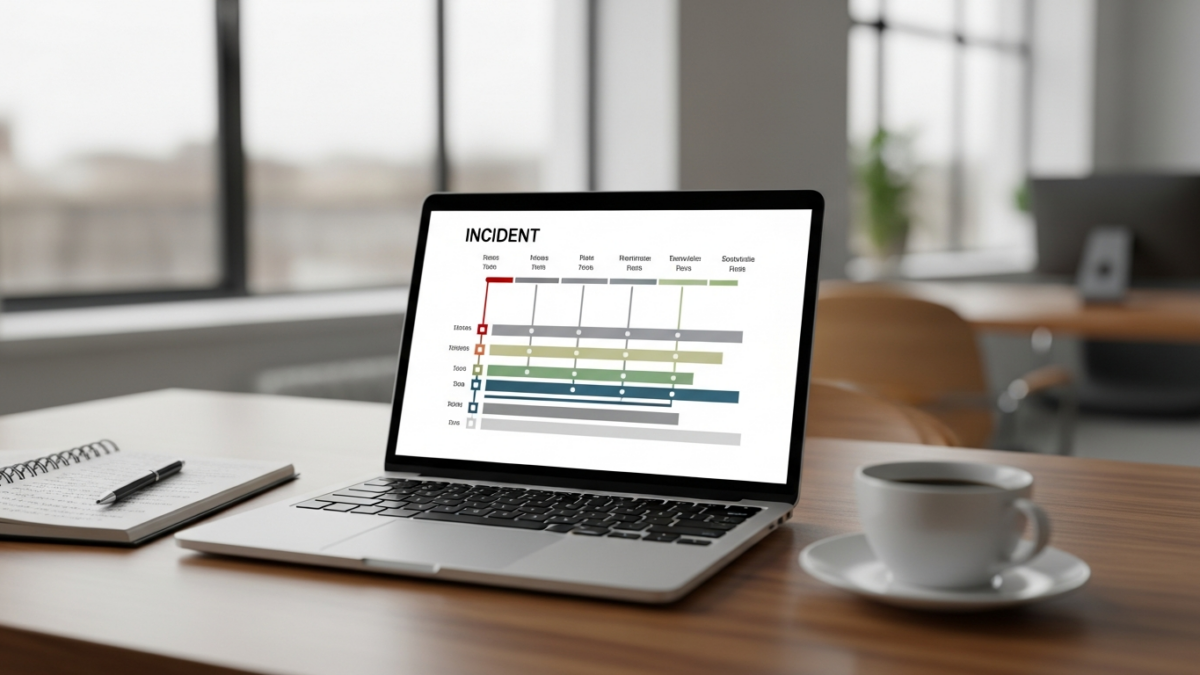
The timeline is the backbone of any effective incident review. It is often the first place readers’ eyes jump to when trying to quickly size up what happened. However, building it manually is a trap.
You must gather data within 24-48 hours while details are fresh. This includes logs, alerts, Slack channels, and tickets. But do not rely on memory. Reviews should rely on real operational data to eliminate guesswork and ensure findings are based on facts.
Break the incident into clear phases: Detection, Response, Communication, Resolution, and Recovery. This structure forces clarity. It highlights where the team succeeded and where the process broke down. For example, did detection take too long? Was communication clear during the response phase?
To avoid the Reconstruction Tax, use automated tools to draft the timeline from raw data. Automating this data collection is critical for small teams. It saves 60+ minutes of manual work and ensures that the timeline is accurate and comprehensive. If you are not automating this step, you are wasting valuable time that should be spent on fixing the root cause.
Step 3: The Review Meeting That Actually Works
The review meeting itself should be short and focused. For minor incidents, aim for a 15-minute review. For standard incidents, cap it at 30-45 minutes. Anything longer and you risk losing focus and generating fatigue.
The agenda should be simple:
1. What went well? Acknowledge the team’s effort. This reinforces positive behaviors.
2. What to improve? Focus on the gaps in the process, not the individuals.
3. Root cause analysis. Keep it high-level. Avoid deep technical dives that belong in a separate engineering ticket.
Avoid committing to action items in the final minutes of the meeting. This is a common failure mode. In the heat of the moment, action items are vague and lack ownership. They are often forgotten or deprioritized. Instead, use the meeting to identify learning points. Capture these points and refine them into specific actions later.
Step 4: Making Fixes Stick
The most critical part of the review is not the meeting, but the follow-through. This is where most teams fail. They identify good ideas but never implement them.
To make fixes stick, use the “48-Hour Soak” method. Capture learning points during the meeting, then refine them into 3-5 committed actions two work days later. This “soak time” allows the team to step back, gain perspective, and prioritize the most impactful changes. It prevents knee-jerk reactions and ensures that actions are thoughtful and well-defined.
Define “Done” clearly. Vague actions like “improve monitoring” are useless. Specific actions like “Add database connection pool alert at 80%” are actionable. Each action must have an owner and a deadline. Without these, the action will drift.
Track completion rates and recurrence rates together. Completion rates tell you if you are doing the work. Recurrence rates tell you if the work is effective. If an incident recurs, the fix was insufficient. This feedback loop is essential for continuous improvement.
Practical Templates for Small Teams
Small teams need templates that are simple and adaptable. Avoid complex forms that require extensive data entry. Here are two practical templates for different incident severities.
The 15-Minute Version (Minor Incidents)
For minor issues that had limited impact, keep it brief:
* Summary: One sentence on what happened.
* Impact: Who was affected and for how long?
* Root Cause: The primary technical reason.
* One Win: What went well?
* One Improvement: What is the single most important change?
* One Action: Specific, owned, and dated.
The Standard Version (Standard Incidents)
For more significant incidents, use a slightly more detailed structure:
* Severity: Define the impact level.
* Timeline: Phase-by-phase breakdown using automated data.
* Root Cause: Detailed analysis of the failure.
* Action Items: List of 3-5 actions with owners and deadlines.
When to Skip the Review
Not every blip needs a document. If an incident was resolved quickly, had minimal impact, and the root cause was obvious and already addressed, skip the formal review. Document the fix in the ticketing system instead. Over-documenting minor incidents creates noise and reduces the signal for serious incidents.
Conclusion
Incident reviews are a critical part of building resilient pipelines. They are not about assigning blame or writing lengthy documents. They are about learning from failures and improving the system. By focusing on blameless culture, automated timelines, short meetings, and specific actions, small teams can turn incidents into opportunities for growth.
Reject the theater of long post-mortems. Embrace the simplicity of practical reviews. Your team’s resilience depends on it.
Sources and further reading
- Post-Incident Review Template: Free PIR & Postmortem Examples
- Top 10 Post-Incident Review Best Practices
- How to Run Post-Incident Reviews That Build Understanding, Not Just Action Items
- Incident management best practices: Complete guide 2026
- What is a post-incident review? Process and best practices



No comments yet